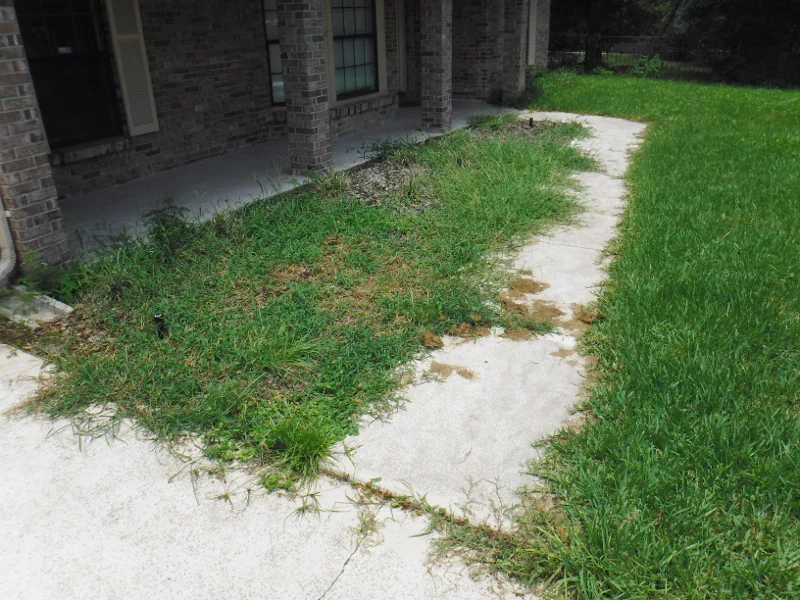
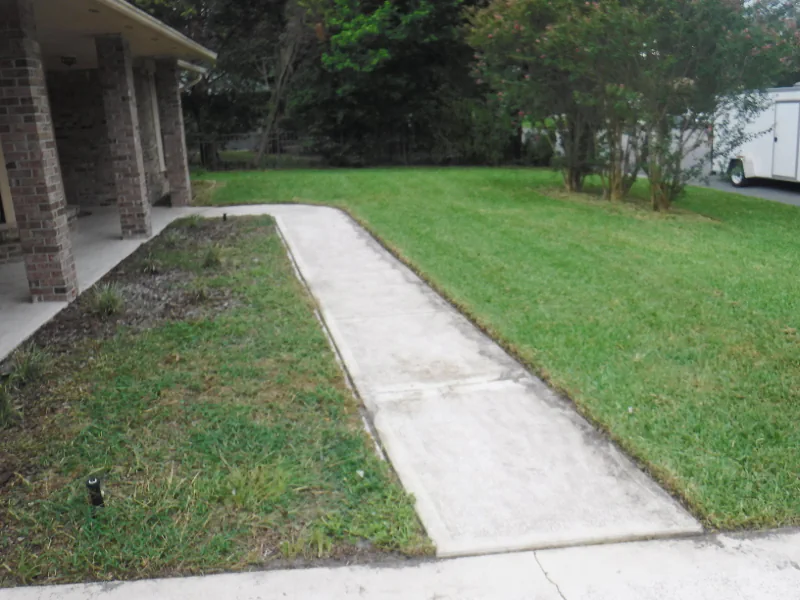
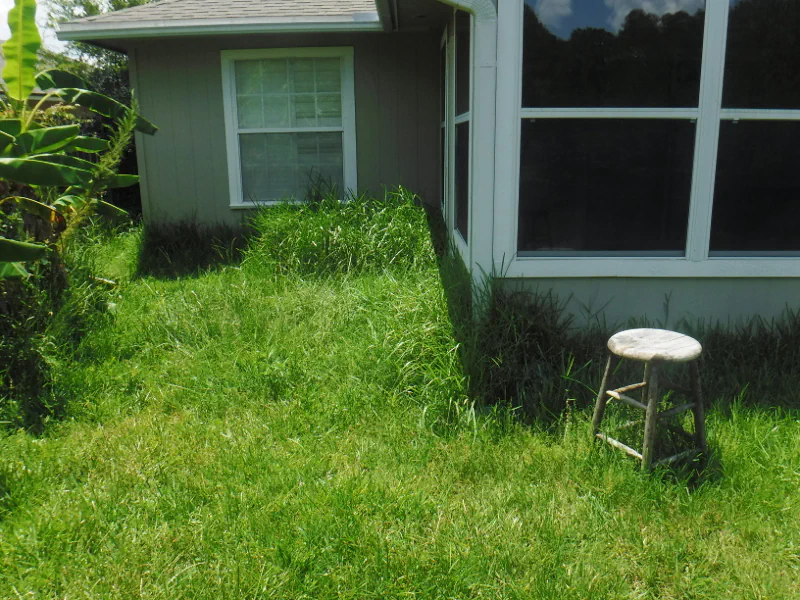
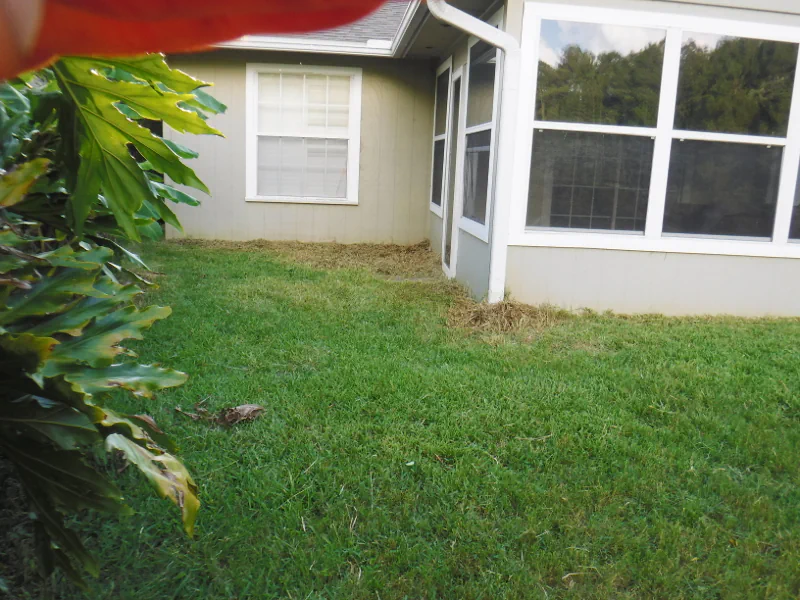
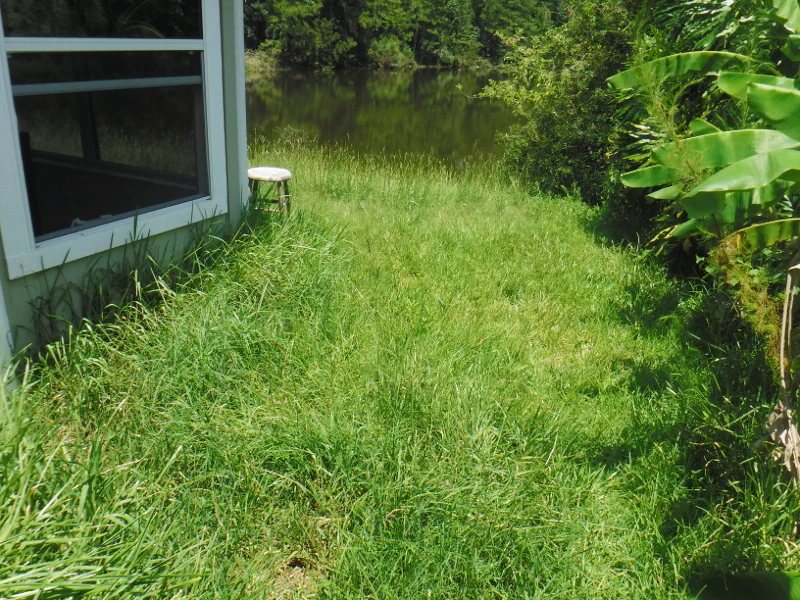
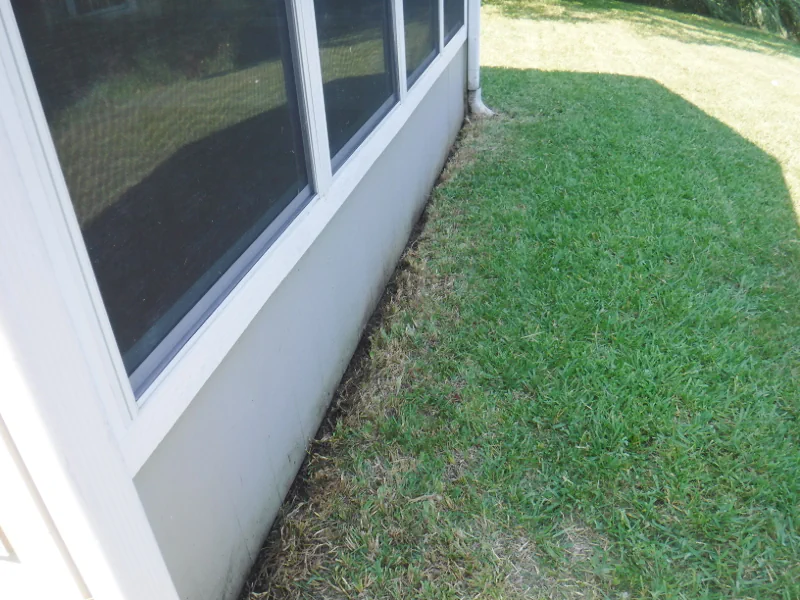
If you’ve noticed patches of grass with long, narrow, silver-green or blueish-green leaves with pointed tips growing in patches in the midst of your turf grass, there’s a good chance it’s torpedo grass (Panicum repens). It also goes by the name bullet grass and creeping panic, which is a suitable name for this nearly impossible to eradicate weed. This weed thrives in full sun and moist conditions, which is why it is loves to grow in your irrigated St. Augustine grass lawn. It can also be found growing in Zosia, Bermuda and Bahia lawns. Unlike many other grasses and weeds, torpedo grass spreads vegetatively, underground with rhizomes that can be 12 inches deep or more, creating a mat that crowds out other grasses and plants. If you’ve ever dug up dollar weeds, it’s very similar.
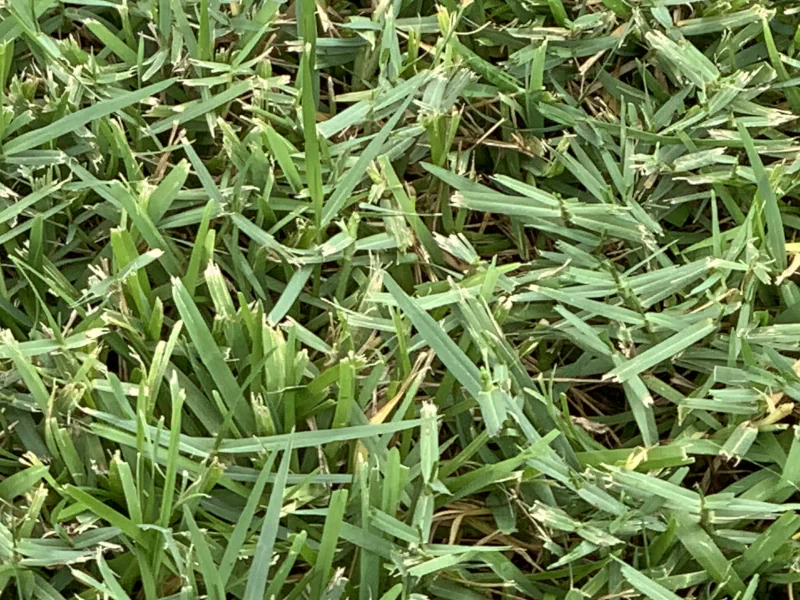
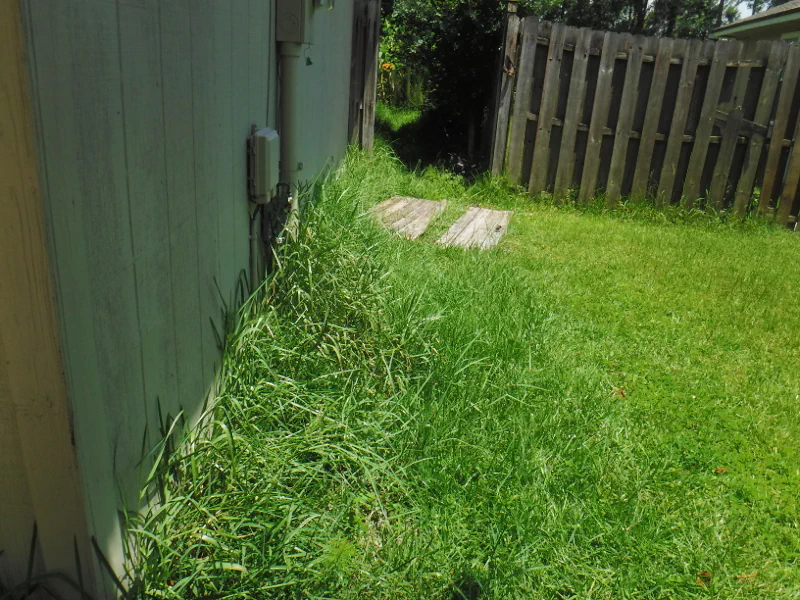
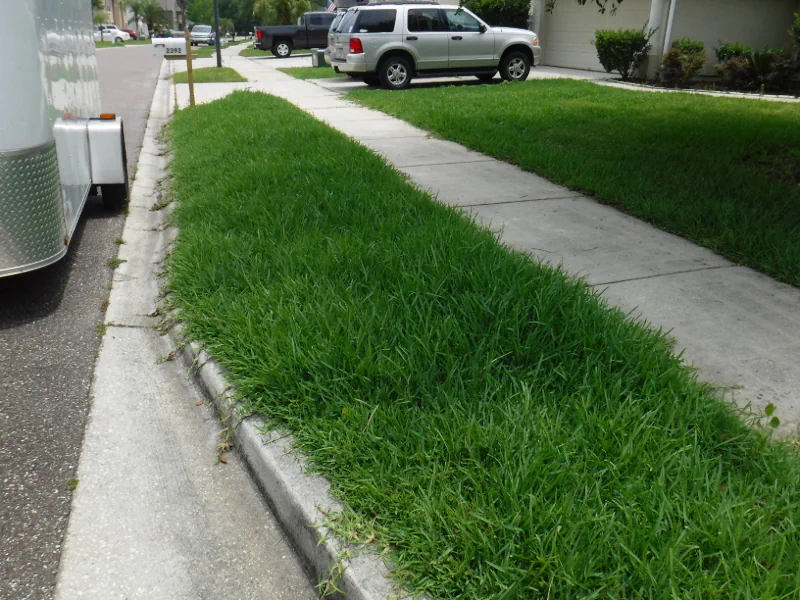
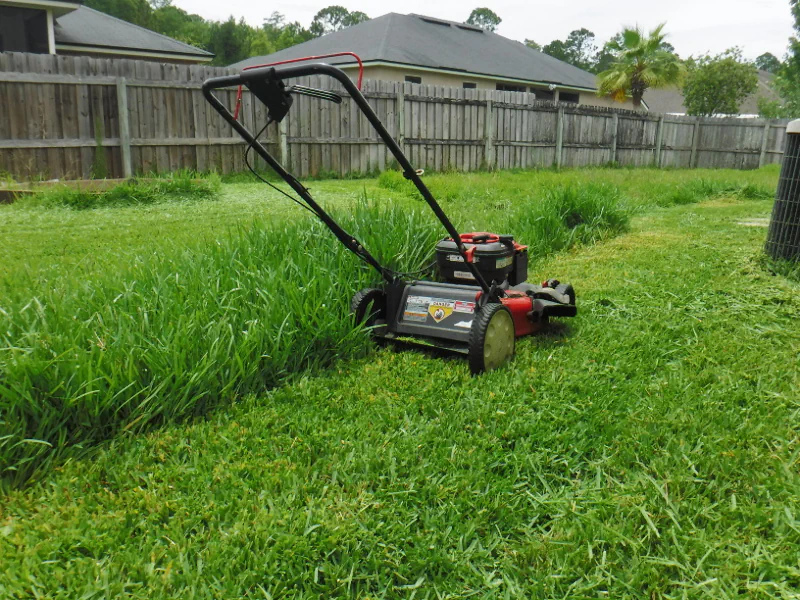
If you look closely, you can see St. Augustine grass growing on the left side and torpedo grass on the right side.
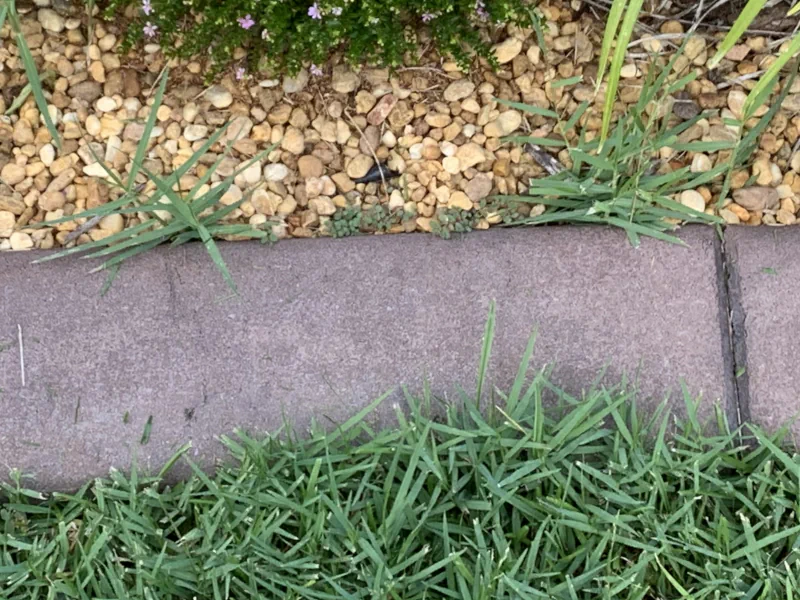
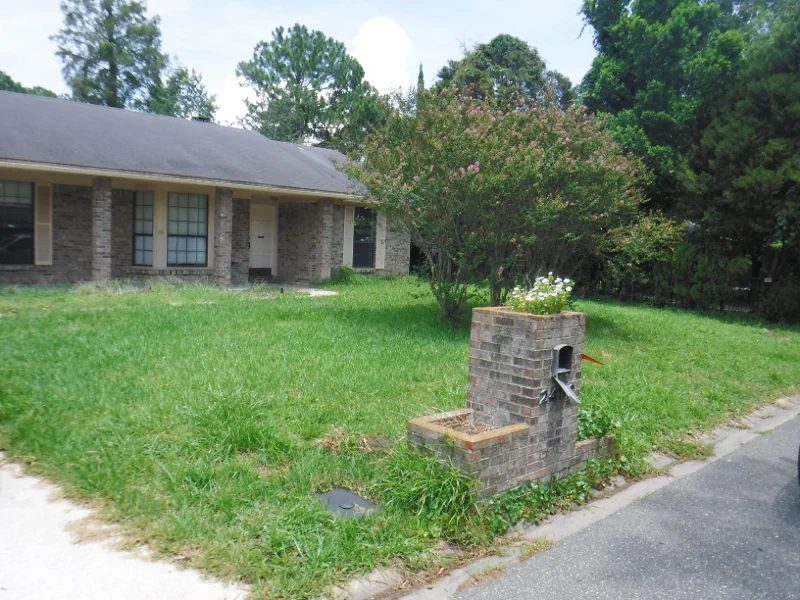
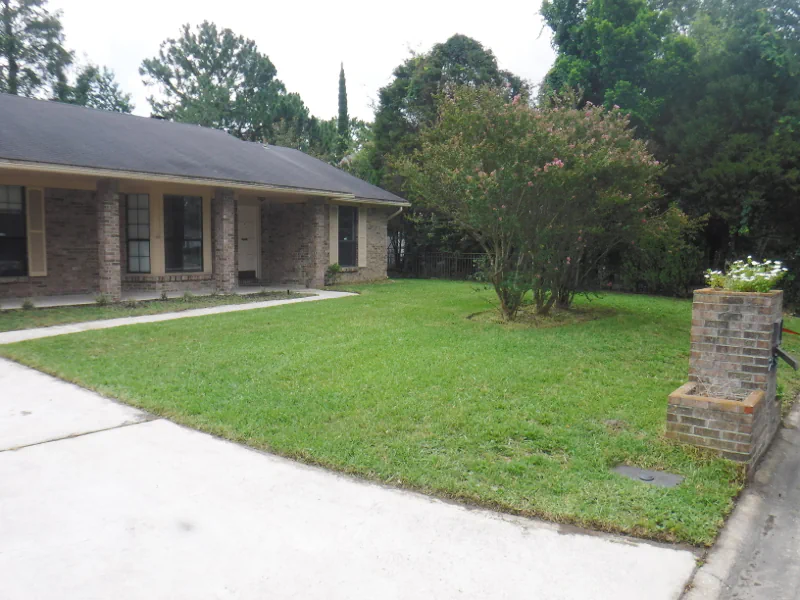
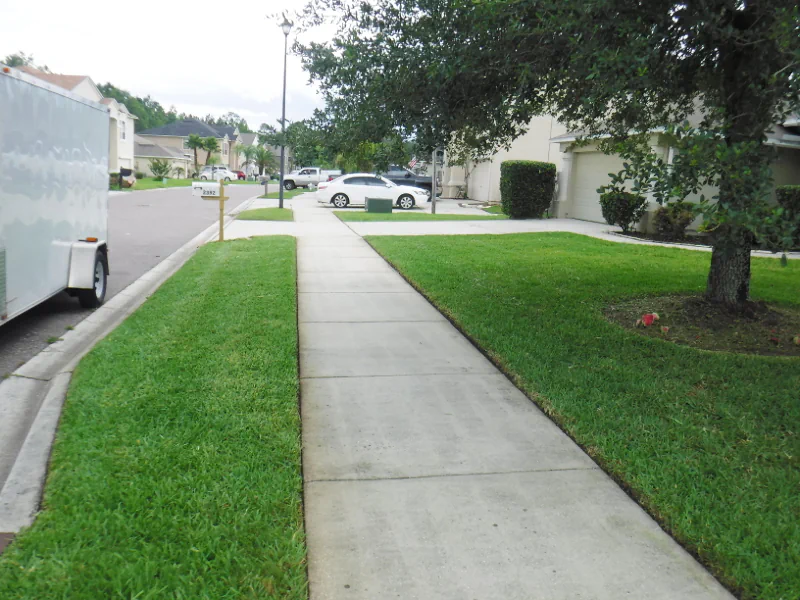
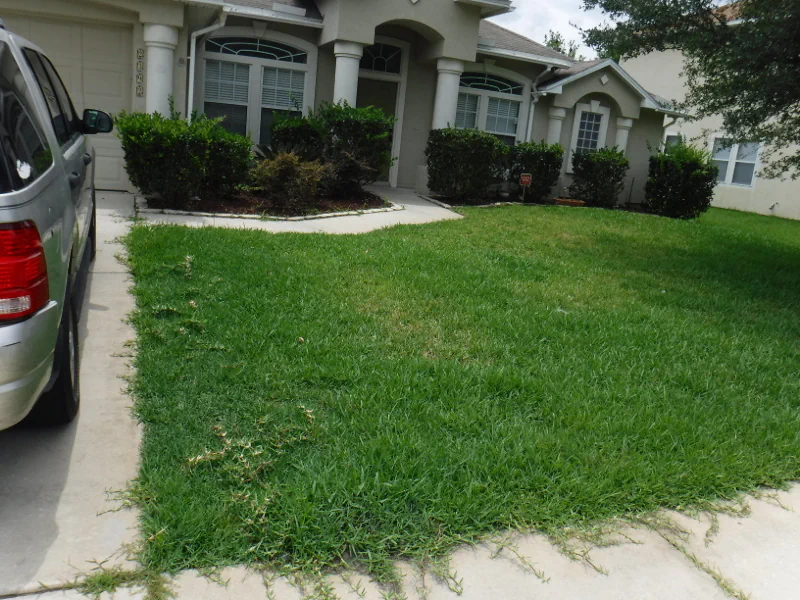
This lawn has been completely taken over by torpedo grass and it has traveled under the landscape border and is popping up in the rock bed.
Torpedo Grass Origins
Torpedo grass is native to tropical and subtropical regions of Africa, Europe and Asia. The first record of this grass was in 1876 and it was intentionally brought to the U.S by the Department of Agriculture in the early 1900s as a forage crop for cattle. It wasn’t long before this grass escaped the pastures and invaded the southern wetlands and shorelines. Torpedo grass is considered a high ecological risk invasive species.
Why it's Hard to Control
One of the main reasons that torpedo grass is so difficult to get rid of is due to the extensive network or underground rhizomes. If you’ve ever tried pulling up some of this grass, most likely it just broke off, leaving the rhizome underground. The rhizome contain a store of energy that will quickly regrow new shoots of grass to replace the ones that you just plucked. You might think that you could just take a tiller and till up the ground and pull rake out all the grass and roots, but this is not effective as any piece of the rhizome that is left behind can sprout new grass. Another reason it is so hard to control is the lack of herbicide treatments for many situations.
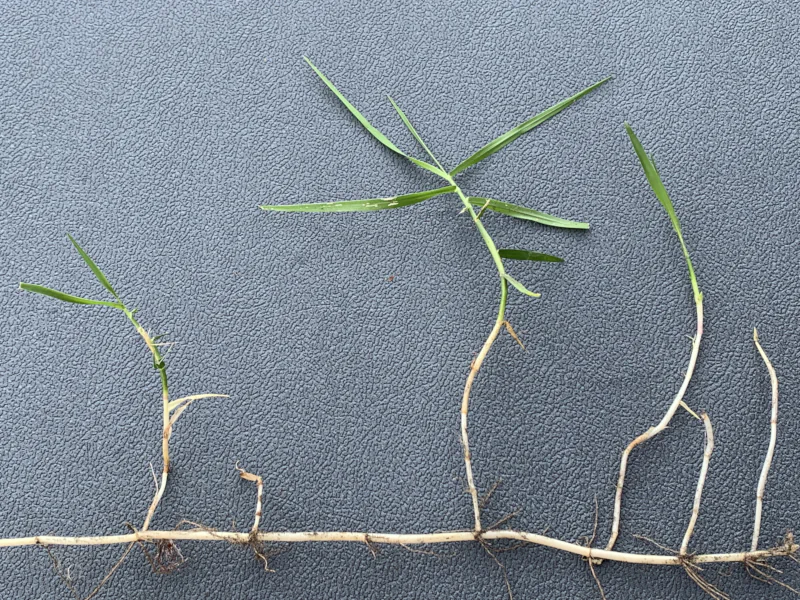
Torpedo grass rhizome. This white "root" is the part of the plant that travels through the soil, spreading the grass.
Getting Rid of Torpedo Grass
In flower beds, you can treat the grass as soon as it pops up with glyphosate. Try to prevent it from spreading all the way to plants in the bed because treating with glyphosate at that point risks injuring or killing them in addition to the torpedo grass. If the grass is coming from your lawn and into your flower beds, this will be a continual battle.
If you have a Zoysia or Bermuda lawn, then you are in luck. The torpedo grass can be treated with a selective herbicide, quinclorac or trifloxysulfuron.
The majority of homeowners have St. Augustine or Bahia lawns. In this case, there is no easy solution. If it’s a very small patch, you can dig it out, being sure to remove all of the rhizome material. For larger areas, you will need to spray with a non-selective herbicide such as glyphosate, killing everything and then resod.
Give us a Call
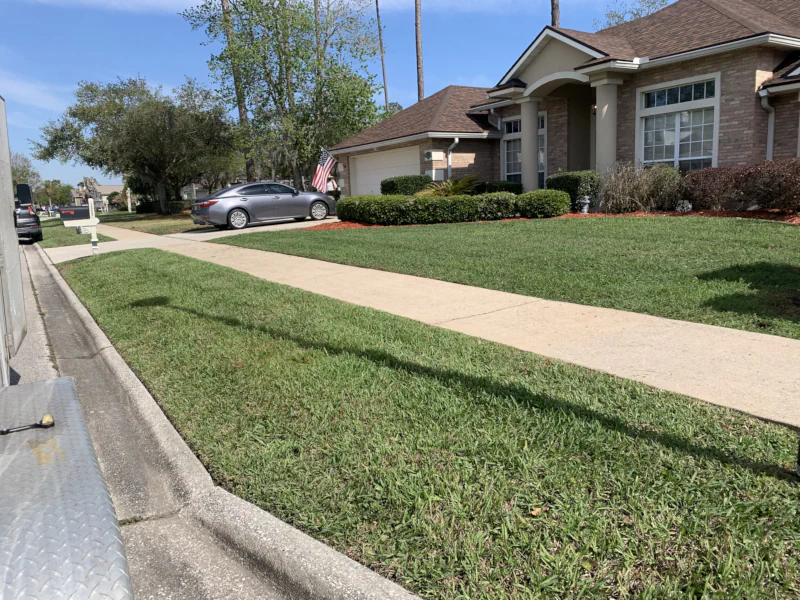
Whether you have that pesky torpedo grass in your lawn or not (and we hope you don’t), we’d love to hear from you. We don’t currently do resodding or major lawn renovations, but we do have room for you if you need mowing, lawn maintenance or a clean up. We serve Orange Park, Middleburg, Fleming Island and Lake Asbury, FL, so go ahead and give us a call today.