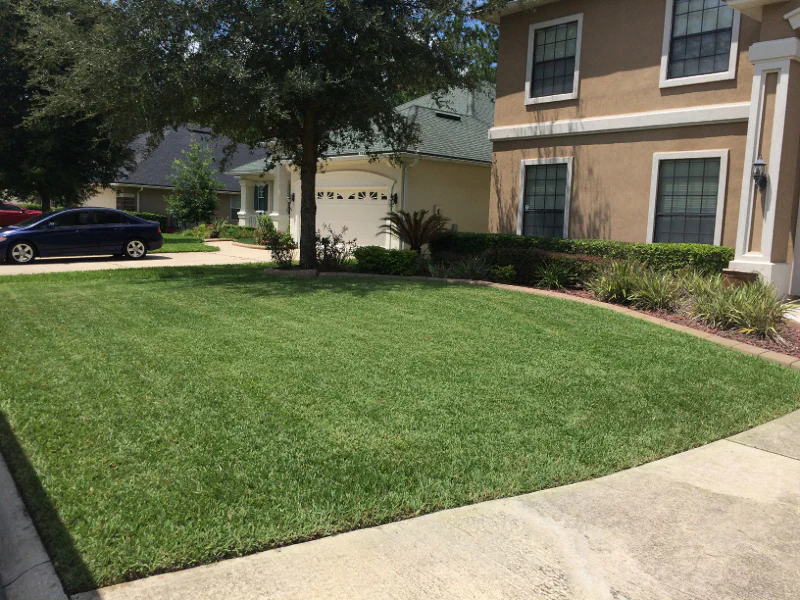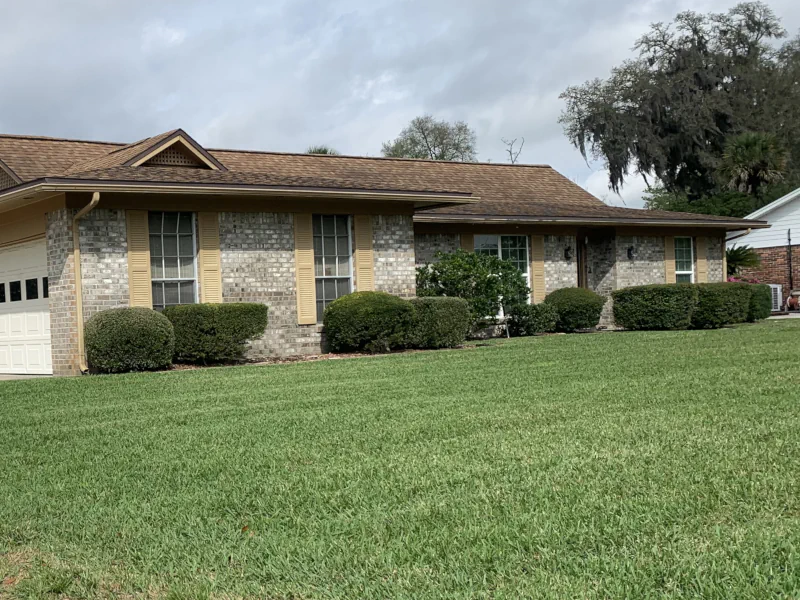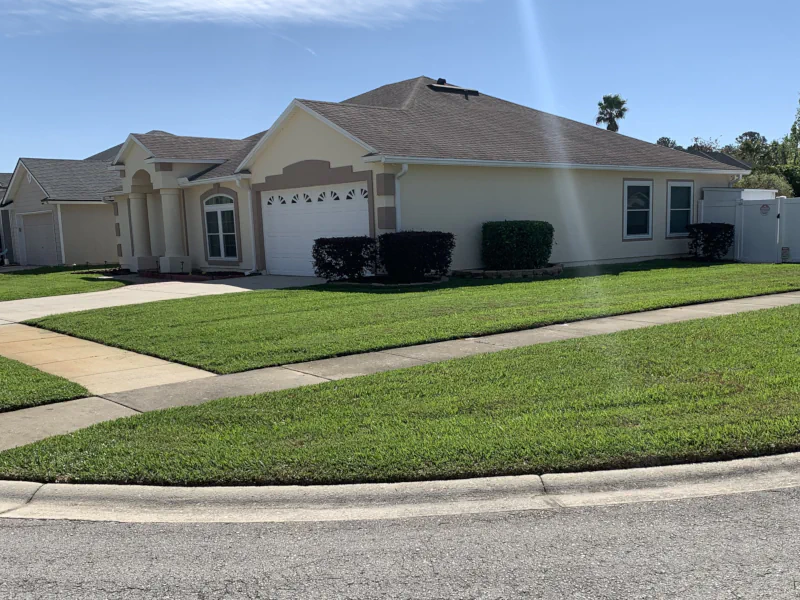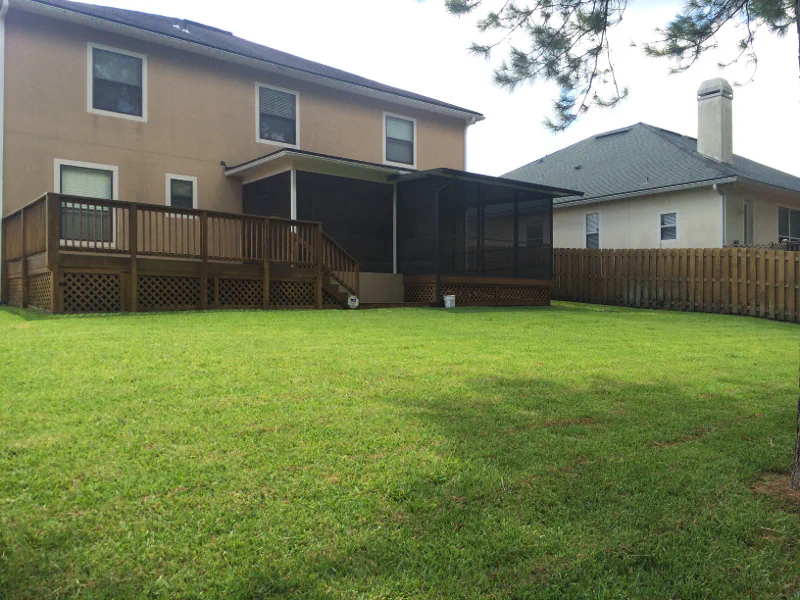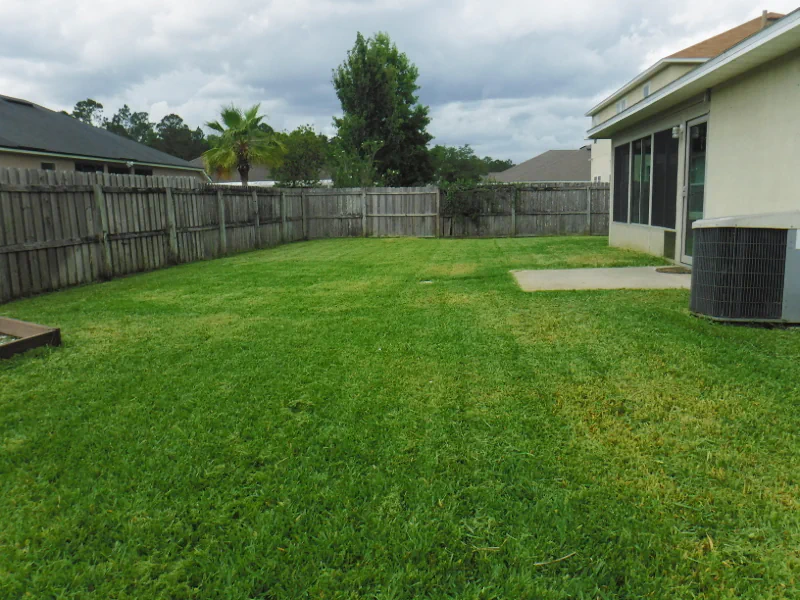
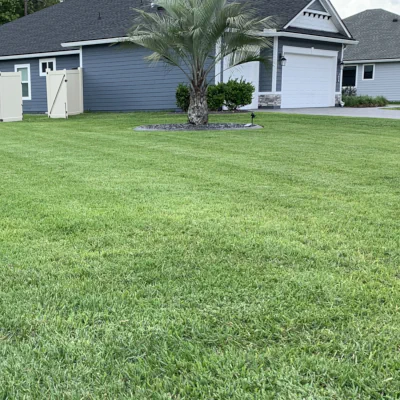
Mowing St. Augustine Grass
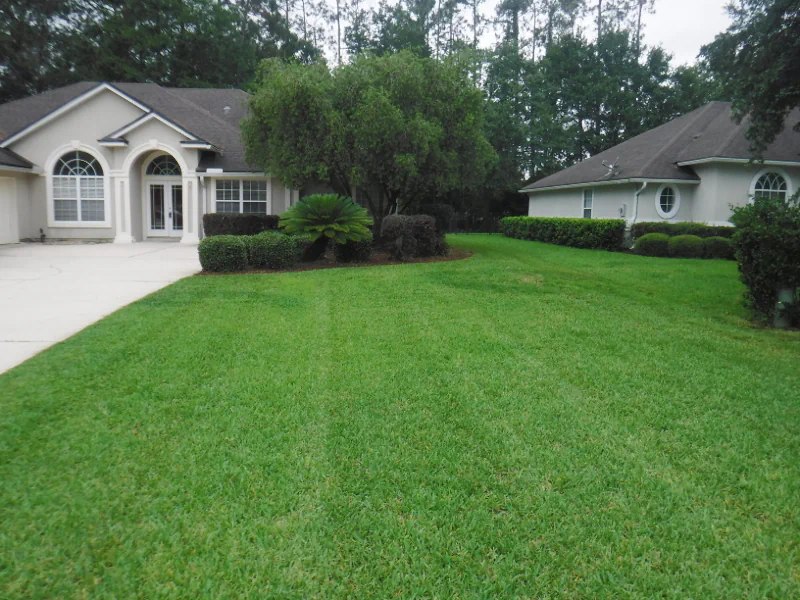
If you live here in Clay County Florida like we do, it may not officially be summer yet but it certainly feels like it and the grass is really starting to grow. With the recent rains that we’ve finally received (we were in a drought for the past month) the grass is really starting to take off for the first time this year which means it’s time to start getting serious about mowing.
Mowing Height and Frequency
The most common question about mowing St. Augustine grass or any grass for that matter, is what height to mow it at. It’s a good question because mowing too low or to high can lead to suboptimal outcomes. The proper height for mowing St. Augustine grass is anywhere from 3 inches to 4.5 inches depending on where you get your information. It’s best to err on the higher side as mowing too low is problematic for several reasons. Regularly mowing too low promotes a shallow root system leaving your grass less capable of dealing with the stress from drought conditions. In general, mowing too low leads to a less vigorously growing lawn that is susceptible to weed invasion and pest problems.
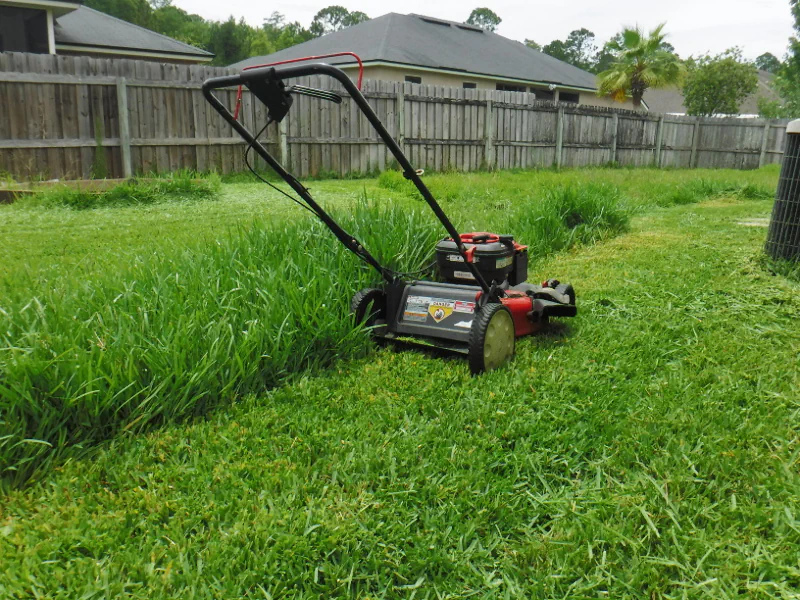
Mowing frequency can vary from yard to yard and may differ from the front lawn to the back lawn. It’s safe to say that you’ll need to have your lawn mowed at least once every two weeks, but more than likely weekly mowing is going to be required for a well watered and fertilized lawn. The general rule of thumb is to not cut off more than 1/3 of the grass blade when you mow. So, if you are mowing at 4 inches (the most common recommendation) then you should mow your lawn before it reaches 6 inches in height.
Tips for Mowing
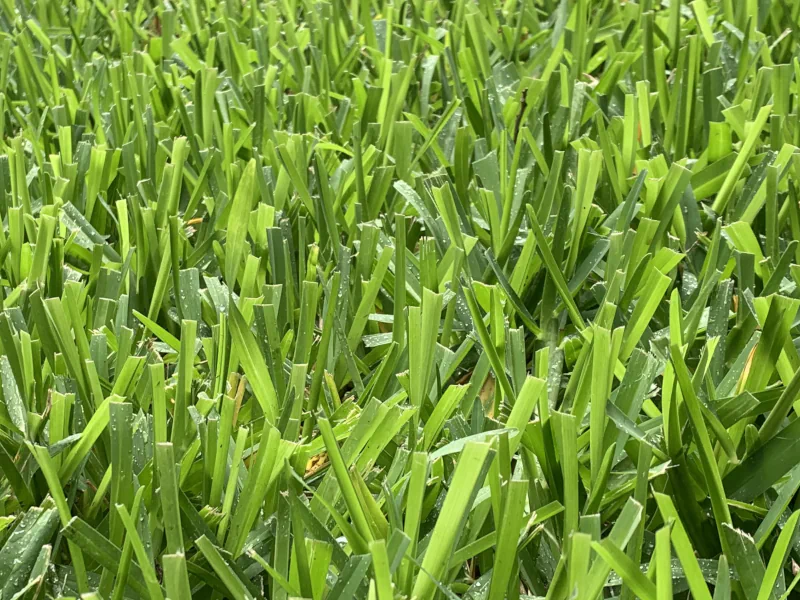
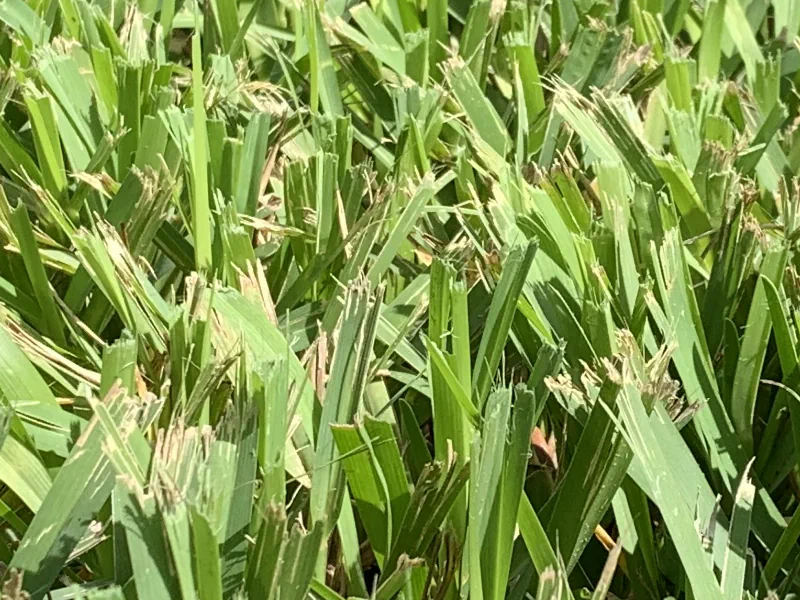
The fist tip is to always use sharp blades on your lawn mower. When you look closely at the individual grass blades you should see a nice clean even cut. If you see jagged or shredded looking blades of grass then it is time to sharpen your blade(s) or get new ones if necessary. For an average sized yard, sharpening once a month should be adequate but always inspect your grass to be sure. Mowing with dull blades not only leaves a lawn with a brownish cast to it but also leaves your lawn vulnerable to disease.
Another tip is make sure your lawn mower tires are properly inflated and especially make sure that both the tires on each side of the mower have equal pressure. This will help ensure that you get a nice level cut across the whole lawn. For the same reason, always sure that your lawn mower deck is adjusted correctly. You can park your mower on a level surface and measure on both sides and from the front and back to make sure everything is level.
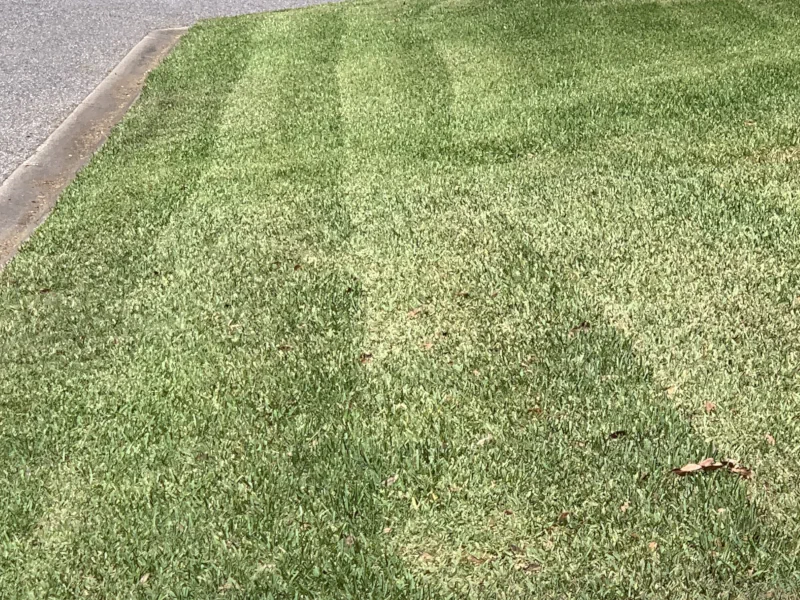
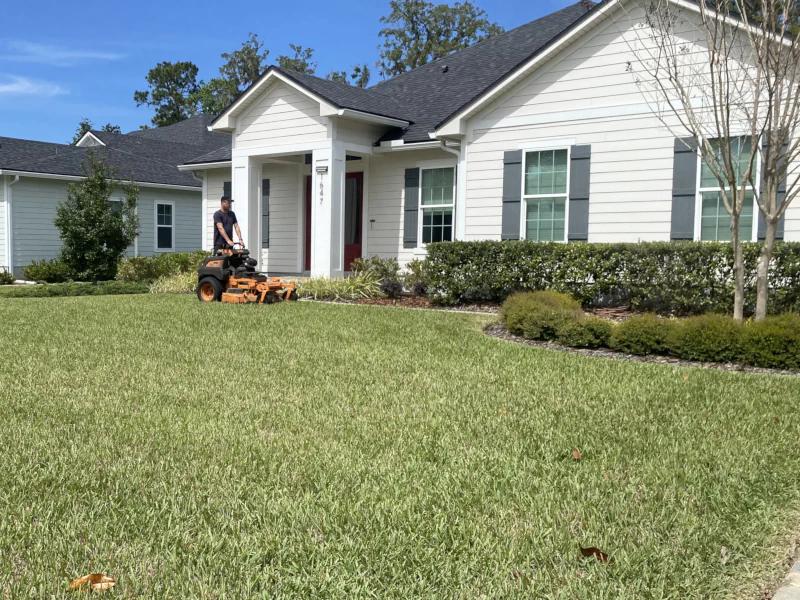
Another tip, especially if you have a riding mower is to always alternate your mowing patterns. More specifically, avoid mowing in the same tracks week after week as you will inhibit the growth of the grass where the tires roll across the lawn and you may also create permanent, unsightly ruts which will require leveling at some point.
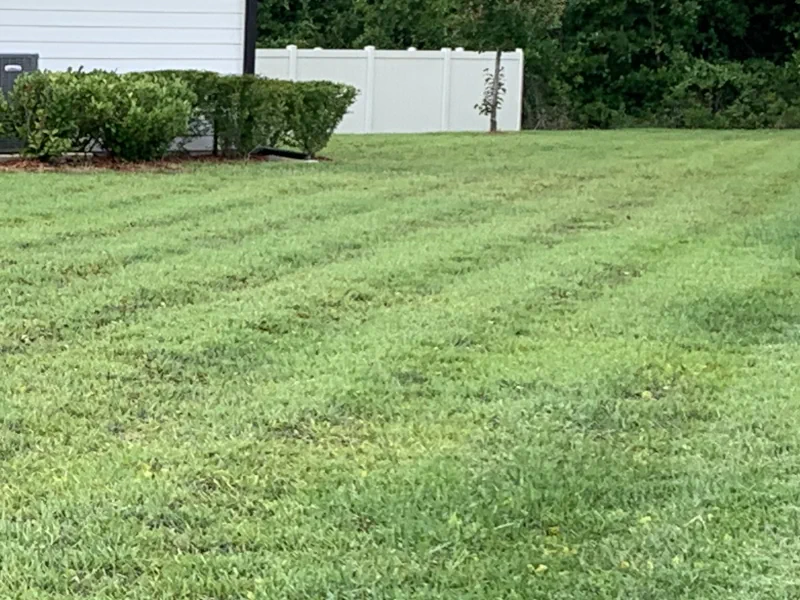
A final tip is avoid mowing when the lawn is wet or soggy. Mowing wet grass can spread disease much more easily than mowing when there is no dew or water clinging to the grass such as after it has rained. Wet grass also has a tendency to clump up and not discharge or mulch up properly, thus leaving clumps of wet grass that are difficult to disperse and leave the lawn looking messy. Mowing before while the lawn is soggy should also be avoided as it can lead to rutting or in the worst-case scenario, you may find yourself with a lawnmower stuck in the lawn.
About Those Clippings
A common consideration is what to do with the clippings. The industry recommended best practice, which may be surprising to some, is to leave the clippings on the lawn. That is to say, don’t bother bagging your grass. Some people suggest that not bagging your grass will cause thatch issues in your St. Augustine lawn, but this has been shown to be a myth. If your lawn is mowed regularly and you are mowing off now more than 1/3 of the grass blade each time, then the clippings will naturally decompose and the nutrients will be recycled back into your lawn. It’s kind of like having free fertilizer. The best approach is to mulch your grass. If your lawn is thick and you don’t have mulching capability on your mower then doing a second or third pass over the lawn should be adequate to shred up the grass so that it isn’t visible on top of the lawn and can easily be broken down by microorganisms.